
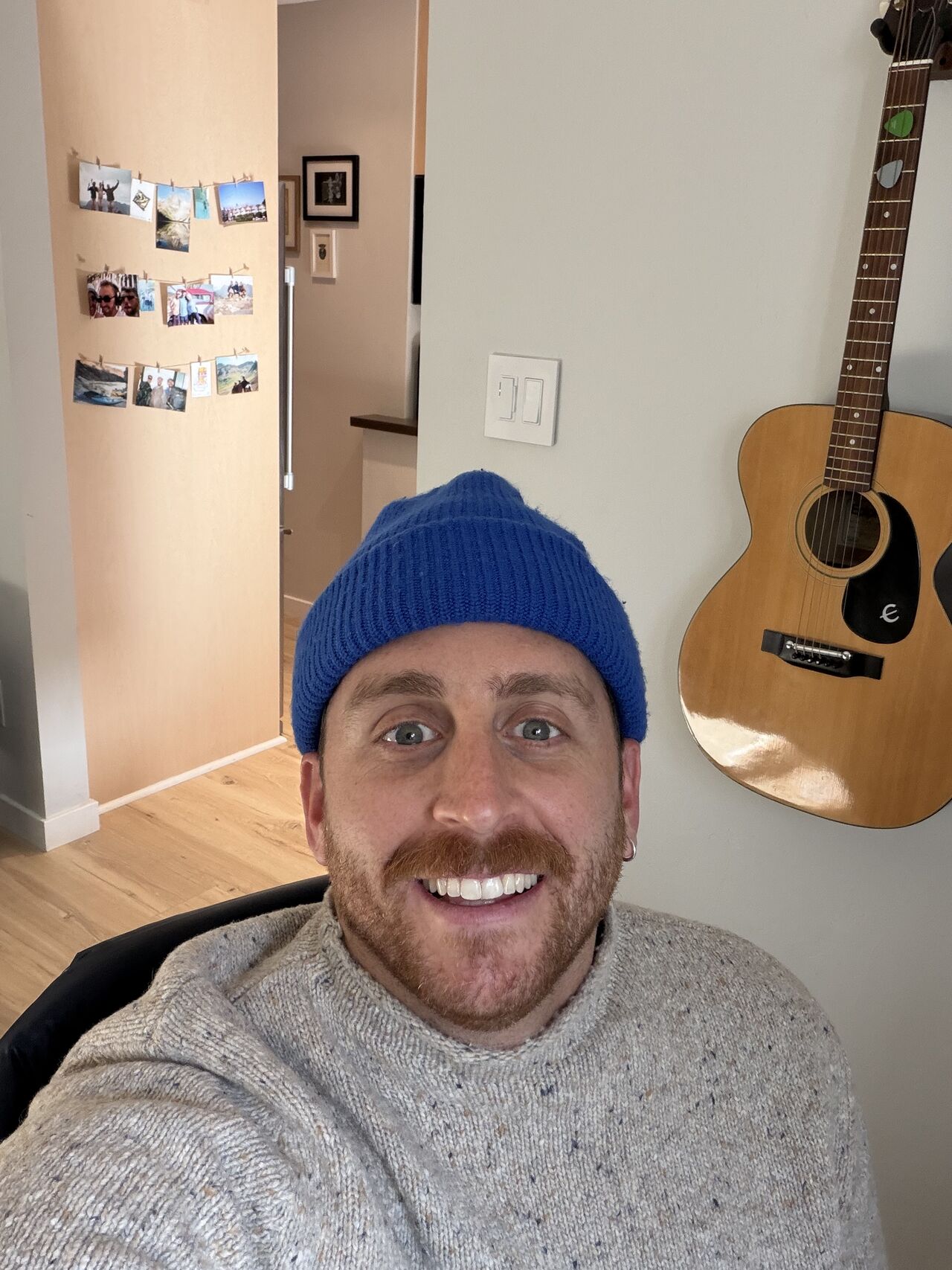
2025 was the best year of my life. And simultaneously, the worst.
On the surface, everything looked perfect. I bought a house and remodeled the entire basement myself. I started dating the love of my life, Meghan—a relationship that fundamentally changed how I see everything. My company Boostcous went from a concept to a real brand with actual sales on real store shelves. KnoCommerce had one of its strongest years yet.
On paper, it looks like a "crushing it" year. The kind people screenshot and share on social media as proof of success.
But here's the part that didn't make it into any highlight reel.
The Hidden Cost of "Crushing It"
I broke my back. I spent three months on crutches, unable to move the way I was used to. During that time, I slid into the worst physical shape of my life. My sleep was wrecked. My energy was depleted. My head became increasingly noisy with stress and anxiety.
And instead of slowing down and recovering properly, I did the thing founders are taught to do: I doubled down on work.
I pushed myself through 80–100 hour weeks, going all-in on KnoCommerce and Boostcous simultaneously. I put zero energy into taking care of myself. Somewhere in the chaos of building businesses while physically broken, "Bar the human" quietly got replaced by "Bar the founder."
My entire identity became wrapped up in metrics and milestones:
- How's MRR looking?
- How's the product launch going?
- What are the Shopify sales numbers?
- What's the next big thing?
It's the same story many entrepreneurs are living right now. We just don't usually post about it on LinkedIn.
The Turning Point: Redefining Success
Going into 2026, I'm making a fundamental shift. I'm done optimizing solely for revenue growth.
My word of the year is Balance.
Not the performative "work-life balance" we put on slide decks and company culture pages. I'm talking about actual, nervous-system-level balance. The kind that allows you to sustain high performance without destroying yourself in the process.
For me, balance isn't an abstract concept. It's a set of simple, non-negotiable commitments:
- Work out outside 3 days per week: Skiing, biking, hiking—whatever it takes to get my body moving in nature.
- Hit the gym at least 2 days per week: I want my back to come back stronger than ever after this injury, which means dedicated strength training.
- Meditate 4 days per week: Even just 10 minutes of sitting still and not trying to solve problems.
That's it. No complex systems or elaborate routines. Just consistent, intentional practices that prioritize my physical and mental health.
Why Founders Need to Redefine "Growth"
Here's the uncomfortable truth I've learned: if I keep running at 80–100 hour weeks, Boostcous and KnoCommerce might continue to grow. But I won't. And that's not a trade I'm willing to make again.
The startup world glorifies the grind. We celebrate founders who sacrifice everything for their companies. We share stories of people working through the night, pushing past their limits, and "doing whatever it takes."
But we rarely talk about what happens when your body forces you to stop. When your back breaks—literally or metaphorically. When the hustle becomes unsustainable and the crashes become inevitable.
Personal growth and business growth don't have to be mutually exclusive. In fact, I'd argue that sustainable business growth requires sustainable personal practices. You can't pour from an empty cup, as the saying goes.
Moving Forward: Same Ambition, Different Approach
So yes, 2025 was both the best and worst year of my life. I'm genuinely grateful for both sides of that equation.
The wins showed me what's possible when I commit fully to building something meaningful. The pain showed me what's not sustainable when I neglect everything else in pursuit of that vision.
Going into 2026, I have the same ambition. I'm working on the same companies. I'm tackling the same complex problems.
The difference? I'm bringing balance into how I approach those challenges.
Because success isn't just about what you build. It's about who you become in the process—and whether that person is still healthy, whole, and recognizable when you reach your goals.
If you're reading this and relating to any part of my story, I encourage you to ask yourself: what would balance look like in your life? Not someday when things slow down (they never will), but right now, in the middle of the chaos?
The answer might be simpler than you think. And it might just save you from learning these lessons the hard way.